
Silent Spring: Rachel Carson
- Nov 11, 2016
- 8 min read
There are names in History that we cannot just forget in a hurry. These individuals are remembered for what they have done to ensure that life on earth continues. Today we visit Rachel Carson, a renowned Environmentalist cum Marine Biologist and the author of "Silent Spring". We are interested in this great book of hers for its academic contribution and together we will surf the world she did very well to describe in this unique book
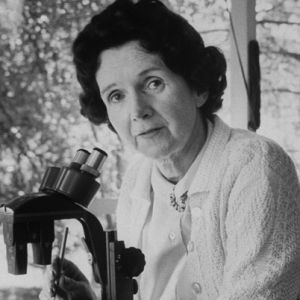
Brief Autobiography
Rachel Louise Carson (May 27, 1907 – April 14, 1964) was an American marine biologist and conservationist whose book Silent Spring and other writings are credited with advancing the global environmental movement. Carson began her career as an aquatic biologist in the U.S. Bureau of Fisheries, and became a full-time nature writer in the 1950s. Her widely praised 1951 bestseller The Sea Around Us won her a U.S. National Book Award, recognition as a gifted writer, and financial security. Her next book, The Edge of the Sea, and the reissued version of her first book, Under the Sea Wind, were also bestsellers. This sea trilogy explores the whole of ocean life from the shores to the depths.
Late in the 1950s, Carson turned her attention to conservation, especially some environmental problems that she believed were caused by synthetic pesticides. The result was the book Silent Spring (1962), which brought environmental concerns to an unprecedented share of the American people. Although Silent Spring was met with fierce opposition by chemical companies, it spurred a reversal in national pesticide policy, which led to a nationwide ban on DDT and other pesticides, and it inspired a grassroots environmental movement that led to the creation of the U.S. Environmental Protection Agency. Carson was posthumously awarded the Presidential Medal of Freedom by Jimmy Carter.
Silent Spring
IN 1958, when Rachel Carson undertook to write the book that became Silent Spring, she was fifty years old. She had spent most of her professional life as a marine biologist and writer with the U.S. Fish and Wildlife Service. But now she was a world-famous author, thanks to the fabulous success of The Sea Around Us, published seven years before. Royalties from this book and its successor, The Edge of the Sea, had enabled her to devote full time to her own writing. To most authors this would seem like an ideal situation: an established reputation, freedom to choose one's own subject, publishers more than ready to contract for anything one wrote. It might have been assumed that her next book would be in a field that offered the same opportunities, the same joy in research, as did its predecessors. Indeed she had such projects in mind. But it was not to be. While working for the government, she and her scientific colleagues had become alarmed by the widespread use of DDT and other long-lasting poisons in so-called agricultural control programs. Immediately after the war, when these dangers had already been recognized, she had tried in vain to interest some magazine in an article on the subject. A decade later, when the spraying of pesticides and herbicides (some of them many ti mes as toxic as DDT) was causing wholesale destruction of wildlife and its habitat, and clearly endangering human life, she decided she had to speak out. Again she tried to interest the magazines in an article. Though by now she was a well-known writer, the magazine publishers, fearing to lose advertising, turned her down. For example, a manufacturer of canned baby food claimed that such an article would cause "unwarranted fear" to mothers who used his product. (The one exception was The New Yorker, which would later serialize parts of Silent Spring in advance of book publication.) So the only answer was to write a book— book publishers being free of advertising pressure. Miss Carson tried to find someone else to write it, but at last she decided that if it were to be done, she would have to do it herself. Many of her strongest admirers questioned whether she could write a salable book on such a dreary subject. She shared their doubts, but she went ahead because she had to. "There would be no peace for me," she wrote to a friend, "if I kept silent." Silent Spring was over four years in the making. It required a very different kind of research from her previous books. She could no longer recount the delights of the laboratories at Woods Hole or of the marine rock pools at low tide. Joy in the subject itself had to be replaced by a sense of almost religious dedication. And extraordinary courage: during the final years she was plagued with what she termed "a whole catalogue of illnesses." Also she knew very well that she would be attacked by the chemical industry. It was not simply that she was opposing indiscriminate use of poisons but— more fundamentally— that she had made clear the basic irresponsibility of an industrialized, technological society toward the natural world. When the attack did come, it was probably as bitter and unscrupulous as anything of the sort since the publication of Charles Darwin's Origin of Species a century before. Hundreds of thousands of dollars were spent by the chemical industry in an attempt to discredit the book and to malign the author— she was described as an ignorant and hysterical woman who wanted to turn the earth over to the insects. These attacks fortunately backfired by creating more publicity than the publisher possibly could have afforded. A major chemical company tried to stop publication on the grounds that Miss Carson had made a misstatement about one of their products. She hadn't, and publication proceeded on schedule. She herself was singularly unmoved by all this furor. Meanwhile, as a direct result of the message in Silent Spring, President Kennedy set up a special panel of his Science Advisory Committee to study the problem of pesticides. The panel's report, when it appeared some months later, was a complete vindication of her thesis. Rachel Carson was very modest about her accomplishment. As she wrote to a close friend when the manuscript was nearing completion: "The beauty of the living world I was trying to save has always been uppermost in my mind— that, and anger at the senseless, brutish things that were being done.... Now I can believe I have at least helped a little." In fact, her book helped to make ecology, which was an unfamiliar word in those days, one of the great popular causes of our time. It led to environmental legislation at every level of government. Twenty-five years after its original publication, Silent Spring has more than a historical interest. Such a book bridges the gulf between what C. P. Snow called "the two cultures." Rachel Carson was a realistic, well-trained scientist who possessed the insight and sensitivity of a poet. She had an emotional response to nature for which she did not apologize. The more she learned, the greater grew what she termed "the sense of wonder." So she succeeded in making a book about death a celebration of life. Rereading her book today, one is aware that its implications are far broader than the immediate crisis with which it dealt. By awaking us to a specific danger— the poisoning of the earth with chemicals— she has helped us to recognize many other ways (some little known in her time) in which mankind is degrading the quality of life on our planet. And Silent Spring will continue to remind us that in our over-organized and over- mechanized age, individual initiative and courage still count: change can be brought about, not through incitement to war or violent revolution, but rather by altering the direction of our thinking about the world we live in.
Sit tight and enjoy the full text of Silent Spring which we will make available Chapter by Chapter
1. A Fable for Tomorrow
THERE WAS ONCE a town in the heart of America where all life seemed to live in harmony with its surroundings. The town lay in the midst of a checkerboard of prosperous farms, with fields of grain and hillsides of orchards where, in spring, white clouds of bloom drifted above the green fields. In autumn, oak and maple and birch set up a blaze of color that flamed and flickered across a backdrop of pines. Then foxes barked in the hills and deer silently crossed the fields, half hidden in the mists of the fall mornings. Along the roads, laurel, viburnum and alder, great ferns and wildflowers delighted the traveler's eye through much of the year. Even in winter the roadsides were places of beauty, where countless birds came to feed on the berries and on the seed heads of the dried weeds rising above the snow. The countryside was, in fact, famous for the abundance and variety of its bird life, and when the flood of migrants was pouring through in spring and fall people traveled from great distances to observe them. Others came to fish the streams, which flowed clear and cold out of the hills and contained shady pools where trout lay. So it had been from the days many years ago when the first settlers raised their houses, sank their wells, and built their barns. Then a strange blight crept over the area and everything began to change. Some evil spell had settled on the community: mysterious maladies swept the flocks of chickens; the cattle and sheep sickened and died. Everywhere was a shadow of death. The farmers spoke of much illness among their families. In the town the doctors had become more and more puzzled by new kinds of sickness appearing among their patients. There had been several sudden and unexplained deaths, not only among adults but even among children, who would be stricken suddenly while at play and die within a few hours. There was a strange stillness. The birds, for example— where had they gone? Many people spoke of them, puzzled and disturbed. The feeding stations in the backyards were deserted. The few birds seen anywhere were moribund; they trembled violently and could not fly. It was a spring without voices. On the mornings that had once throbbed with the dawn chorus of robins, catbirds, doves, jays, wrens, and scores of other bird voices there was now no sound; only silence lay over the fields and woods and marsh. On the farms the hens brooded, but no chicks hatched. The farmers complained that they were unable to raise any pigs— the litters were small and the young survived only a few days. The apple trees were coming into bloom but no bees droned among the blossoms, so there was no pollination and there would be no fruit. The roadsides, once so attractive, were now lined with browned and withered vegetation as though swept by fire. These, too, were silent, deserted by all living things. Even the streams were now lifeless. Anglers no longer visited them, for all the fish had died. In the gutters under the eaves and between the shingles of the roofs, a white granular powder still showed a few patches; some weeks before it had fallen like snow upon the roofs and the lawns, the fields and streams. No witchcraft, no enemy action had silenced the rebirth of new life in this stricken world. The people had done it themselves. . . .This town does not actually exist, but it might easily have a thousand counterpa rts in America or elsewhere in the world. I know of no community that has experienced all the misfortunes I describe. Yet everyone of these disasters has actually happened somewhere, and many real communities have already suffered a substantial number of them. A grim specter has crept upon us almost unnoticed, and this imagined tragedy may easily become a stark reality we all shall know. What has already silenced the voices of spring in countless towns in America? This book is an attempt to explain.
Comments